Professional Communication
ZAA135 | Module 1 | Welcome. Why do we communicate? Styles of communication and where we use them.


Welcome to the Professional Communication unit for 2020!
This unit will cover a range of themes across the ten weeks with the focus being on understanding communication, our communication styles and strengthening how we act as communicators in our workplace, study and our lives in general. We hope that as a result of completing this unit, you will become increasingly adaptable, open and sophisticated in terms of your approach to communication while developing a new set of tools for considering and appreciating communication practices.
Module objectives: What we will cover this week
- An Introduction to the unit
- Defining “communication”
- The history of communication in a nutshell
- How do we communicate? Looking at communication styles
- Key points for the week
- Coming up next week
Professional communication differs to “regular” communication we may have every day with friends and family – but what makes it different? We will explore that and other themes across the next ten weeks:
As you can see, we will have a term full of relevant and valuable topics to learn about, that will allow you to explore communication across the board. The best place to get started, is by thinking about what communication means to us as individuals and looking into how it is defined.

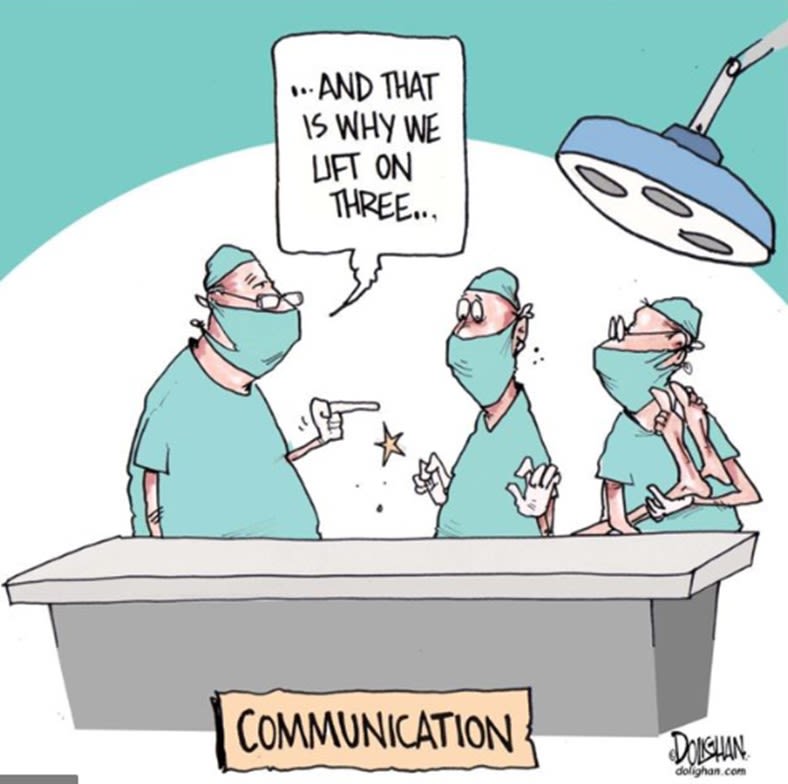
Figure 1. Communication (retrieved from: www.dolighan.com)
Figure 1. Communication (retrieved from: www.dolighan.com)


Defining “communication”
Although the term “communication” is one we are probably all very familiar with, is also one that can be quite hard to define. It has been described as one of the most “overworked” terms in the English language (Littlejohn and Foss, 2011) and although many attempts have been made to arrive at a “best” definition, this has proved impossible so far. What is clear, is that debates around what communication means and how it is characterised will probably never cease to exist, so it is important to look at the definitions and use them as flexible tools. With the term “communication” it is easy to see that different definitions serve different functions and each definition complements the term in different ways.
Consider the term "communication" and in one sentence offer your “best” definition of what it means to you. Share your definition with your classmates using the Padlet below.
If you haven't already created a Padlet account please follow the three steps below:
Step 1. Create a free account with Padlet by clicking here: https://padlet.com/auth/signup
Step 2. Once your account is setup, navigate back to this module tab (or close the your Padlet account window) and click refresh.
Step 3. Post your response by clicking the "+" symbol below each question- you can also upload an image or comment on other posts as well!

Communication has been studied and assessed for many decades, but the rise of new technologies in communication, such as television, computing, the internet and mobile phones have empowered all of us to do more, faster and on a global scale (Pearce, 2007). As communication has assumed enormous importance across the years, so has the research and need for people to understand more about it. But, before taking an in-depth look into Communication now, we will investigate the past, starting where our interest in communication emerged, how long we have been exploring it and who the famous communication philosophers are and what their theories tell us.
A long, long time ago...
Let’s start by looking at the history of communication, in a snapshot.
Human communication was revolutionized with the origin of speech approximately in approximately 500,000 BC. Symbols were developed much later, about 30,000 years ago. The imperfection of speech, which nonetheless allowed easier dissemination of ideas and stimulated inventions, eventually resulted in the creation of new forms of communications, improving both the range at which people could communicate and the longevity of the information. Communication ranged (and still ranges) from very subtle processes of exchange, to full conversations and mass communication.

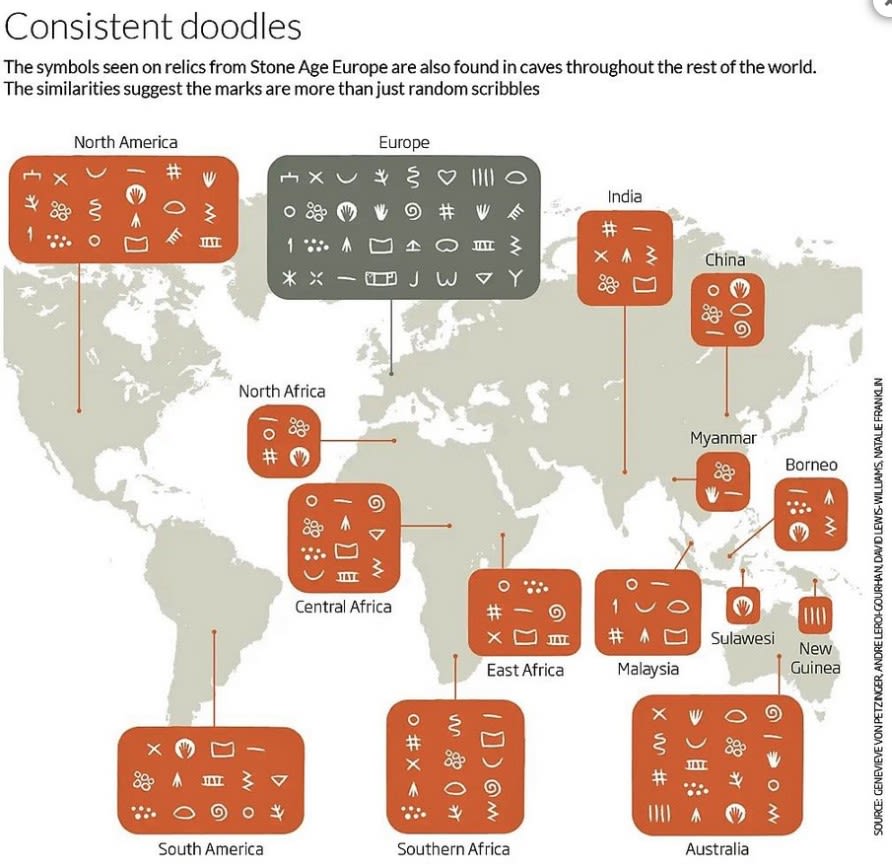
Figure 2. Symbols from the Stone Age found all over the world (retrieved from: www.newscientist.com)
Figure 2. Symbols from the Stone Age found all over the world (retrieved from: www.newscientist.com)
However, we know that one of the most important elements of communication, relied on the key concept of the symbol. The oldest known symbols created for the purpose of communication were cave paintings, dating to the Upper Palaeolithic age. The oldest known cave painting is located within Chauvet Cave, dated to between 30,000 and 32,000 BC. These paintings contained increasing amounts of information and the connection between drawing and writing can be further shown by linguistics. We now know that in Ancient Egypt and Ancient Greece the concepts and words of drawing and writing were one and the same.

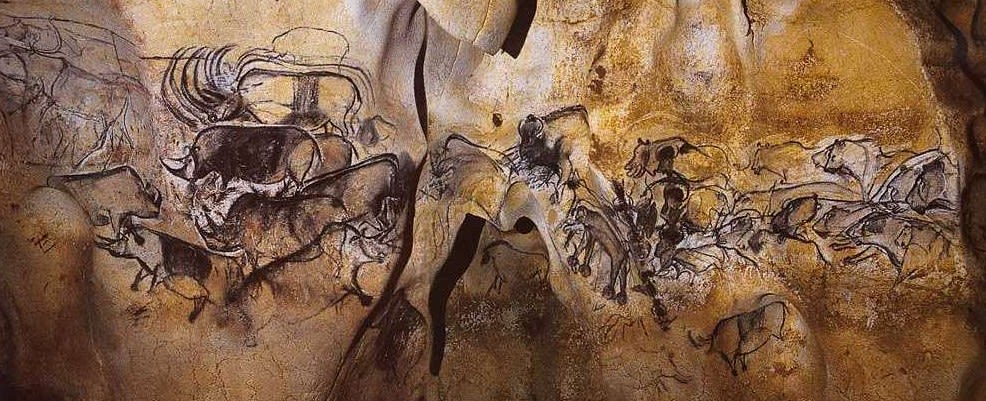
Figure 3. Cave Paintings in the Chauvet Cave, France (retrieved from: www.donsmaps.com/chauvetcave.html)
Figure 3. Cave Paintings in the Chauvet Cave, France (retrieved from: www.donsmaps.com/chauvetcave.html)
Other examples include Herodotus – also referred to as the ‘father of history’ – who often represented the speeches of Persians and Greeks to the masses and this can be described as an early attempt to depict significant communication events of the past for the purpose of the present. These cultures deeply valued the spoken word and recording the historical speeches of Greek and Roman public speakers, such as Socrates and Cicero can be described as a representation to preserve communication and history. The same can be said of text and depictions that were recorded and kept of great communication events – specifically those with religious significance and recorded in Hindu and Buddhist texts. There are also examples from the Mayans and Aztecs, who communicated about the devastation of their civilisations.

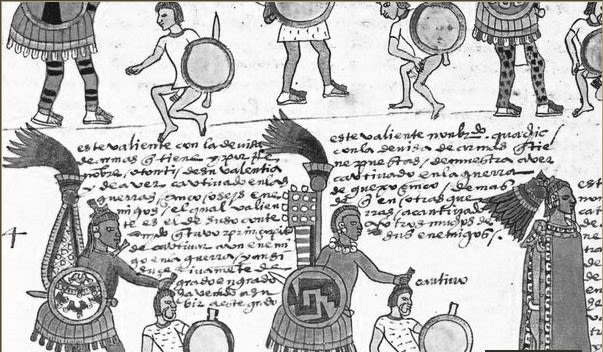
Figure 4. An example of Aztec Words and Paintings (retrieved from: https://www.ancient-origins.net/history-ancient-traditions)
Figure 4. An example of Aztec Words and Paintings (retrieved from: https://www.ancient-origins.net/history-ancient-traditions)
What is fascinating, is that since primitive times, significant changes in communication technologies (media and appropriate inscription tools) have evolved. This has taken place at the same time as shifts in political and economic systems, and by extension, systems of power.
It is interesting to think that Communication, as we know it, dates back so far. Can you think of why Communication and Media may have evolved more significantly during times of shift in political and economic systems? Does that still happen now? Please add your responses to the padlet below.
Not so long ago...
So, we know that early symbols and paintings really progressed the way people communicated with one another many years ago. We also know that bigger, better and more specific inventions came about once humans started communicating effectively with one another. Since that time, the ways we communicate have become more efficient, creative and technologically focused.
In the seventeenth and eighteenth centuries, communication became and important keyword in English, French and Scottish philosophical discourse. Enlightenment ideologies, liberalism and theories of community all gained as a result of communication. It opened the eyes of populations to different ways of thinking and researching in language, media and civilisation overall. Philosophers of the time spoke of how communication was connected to ideas of human progress and mapped itself to the development of language, writing and print over time. It also distinguished civilisations – people were now able to separate themselves from primitive societies without writing systems.
The nineteenth century saw “communication” become a standard term, especially in the area of political economy and giving rise to the science of sociology. The nineteenth century gave way to the more specific studies around printing, books, newspapers, postal systems, telegraphs, transportation routes and all other related communicative wonders.
By the late nineteenth century, people were starting to talk about the history of communication, by linking it to many other disciplines, such as socialism, civics and Catholicism which would lead communication to become a central term and concept into the next century.


Moving into the twentieth century...
If we fast forward to the twentieth century, that’s where we can start to see a large volume of innovations and new ways of communicating, which came as a result of (mainly) industrialisation, technology, literacy and of course, globalisation. As a result of our “new” ways of thinking we also became more open minded about communication as a medium and realised that beyond symbols and paintings – and old-fashioned talking to one another – there were other ways we were communicating or conveying a message, such as:
- Music
- Religion
- Nature
- Journalism
- Technology (radio, TV)
- Politics
- Languages; and
- War
Perhaps not surprisingly, it is “War” that has had the greatest impact on western communication since the 1900s. There was an immense interest in communication developed after Word War I and this was prompted by advances in technology and literacy at the time. The desire to improve society through social change ensured that communication played an important role in propaganda and public opinion and in the role of media communication in commerce, marketing and advertising.
Communication was growing up and branching out.
After World War II, the social sciences became even more prominent, and the populations’ interest in communication strategies intensified. The use of propaganda during the war to spread and engage people with numerous regimes alerted them to the use and abuse of communication strategies and the study of communication developed considerably.
Since both the World Wars, the global interest in communication and strategies (branches or areas) surrounding it has grown exponentially. Can you think of any areas that use communication to inform their studies? For example, Psychology and Communication can be found together as psychologists often investigate communication as a way of studying human behaviour. Is there another area (or other areas) you can think of?
Communication in 2020 and beyond!

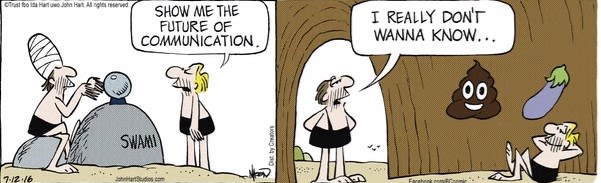
Figure 5. The future of Communication (retrieved from: https://imgur.com/r/funny/TVxWWBT)
Figure 5. The future of Communication (retrieved from: https://imgur.com/r/funny/TVxWWBT)
It might only be a comic, but there may be some truth in the message being given above. Just like the cave paintings mentioned previously, people are now using Emojis in their daily conversations daily and new Emojis are being developed all the time – pictures give our messages more context. Some people have even referred to emojis as the language of the future!
Watch the video below and think about whether you believe Emojis may be the future of communication.
Linguistics Research: Are emojis the future of communication? | 2:58
Aside from Emojis, communication in 2020 is certainly different and more evolved than it was going back even just two decades – the main contributor to that has been technology, especially the world wide web and the electronic devices we use in order to communicate with others.
The internet has allowed us to engage in a way that was never possible 30 years ago and share and access information in a fairly seamless way. This generation will reap the benefits of communicating with people in different global locations immediately, and this will only encourage relationship building and engagement with people all over the world. Distance will cease to be a barrier for communication.
Also, the devices we use for communication will only get more advanced, with capabilities to make communication even easier. One example is the iPhone. Released in 2007, the iPhone changed the way we communicate by allowing the tool to communication to always be in the palm of our hands. By accessing the internet through a mobile device, you can communicate for school, work and entertainment (among other things) 24 hours a day.
The other tool we have embraced is social media. The internet has made social media a reality! People can now communicate with family, friends, colleagues on a greater scale and immediately. We will discuss all of this in more detail later in the unit.
How do we Communicate? Looking into communication types and styles.
All this leads us to looking at how we communicate with one another and which communication styles we are familiar with and use in different situations. Research shows that every person has a unique communication style, a way in which they interact and exchange information with others. If that’s right, there must be a long list of different styles, which adapt to different situations, moods and people – but that isn’t the case. There are a few different schools of thought around communication styles, especially when used in relation to human behaviour and sociology, but it is universally agreed that there are generally four main communication styles. These are:

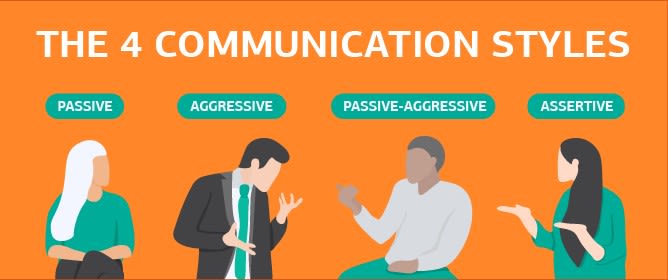
Of course, how each of these styles is described can vary considerably. Let’s take a brief look at each style and what it means. You will find more information about each style in the quiz you will complete for Engagement Task 2.
The Passive Communicator is basically characterized by NOT communicating. When passive communication is someone's primary approach, on the plus side, they're probably very well-liked by the people in their lives because they're agreeable, pleasant, and always say "yes" to other people's requests.
The Aggressive Communicator is characterized by a competitive, "must win" approach. The aggressive person has discovered that by being ultra-direct, in-your-face, and personal, he or she can get others to back down. Bottom line: it's quick and it works . . . at least for the short term. The one thing no one can ever say about an aggressive person is, "I have no idea how he/she feels about this."
The Passive-Aggressive Communicator is usually used by those who have been thwarted in their efforts to express how they really feel. Sometimes it results from being told by parents, teachers, bosses, or other authority figures, that the person's input wasn't needed or valued. As a result, passive aggressive communicators become frustrated by others' unwillingness to listen and discover that they can use sarcasm, negative hints, and "jabs" to get their point across without taking responsibility for the comments, because they can always say, "I was just kidding."
The Assertive Communicator is the most balanced of the styles. Assertive people look out for themselves, but also show caring and interest in others. Assertive individuals can stand up for their rights but are also sensitive to the rights of others. People who choose this style are usually excellent communicators, honest about their feelings, respected, and well liked.
Engagement Task 2
Upload your style and a short reflection (maximum of 40 words) about the Communication Styles quiz you completed (i.e. it was interesting and very accurate/I felt it was off the mark because…) to the Padlet below. Have a read through the other student responses to get a feel of which styles make up the class!
Now that you’ve learned about the four basic communication styles, take that knowledge and apply it to your studies, workplace and everyday life. You can learn a lot about how to be a better communicator by being aware of how others communicate – and how to adapt to situations for more efficient and fulfilling connections.
Understanding different communication styles can radically improve the quality of your relationships. That’s because your level of skill in navigating difficult conversations depends on your ability to connect. What’s more, good communication skills and the ability to connect with others directly correlates with career success and job performance (Butler & Cantrell, 1994).
Key points for this week
Hopefully this week has given you a rounded introduction to the world of Professional Communication, the take away messages for Week 1 are:
- Defining communication is no simple task, there are quite a few definitions available that offer a good description
- Communication goes all the way back to antiquity and people have been using symbols to communicate for over 30 000 years!
- From the 17th century until now is where the bulk of communication as we know it has developed – literacy, technology and globalisation gave rise to people’s interest – the Wars were especially important
- Technology has had a major influence on how we communicate in the 21st century
- There are four main communication styles we all use every day – which one is yours?
Coming up next week...
Next week we will focus on how we communicate with one another. We will investigate verbal and non-verbal communication in the workplace, at home and in our study and look at how AUSLAN, interpretation & translation and other forms of communication (such as braille) play an important role in people’s lives.


Further reading and viewing
Integrating Community Concerns with Your Experience – Link in Week 1 content in MyLO
Morreale, Spitzberg & Barge, 2007 Human Communication: Motivation, Knowledge, and Skills
Video: From cave drawings to emojis: Communication comes full circle. Interesting video about how communication has evolved to include emojis in a way that is part of effective conversation.
References
Books:
Littlejohn, S. & Foss, K. (2011). Theories of Human Communication. Long Grove, IL: Waveland Press.
Pearce, W. (2007). Making Social Worlds: A Communication Perspective. Malden, MA: Blackwell.
Simonson, P., Peck, J., Craig, R., Jackson Jr., J. (2013). The Handbook of Communications History. New York, NY: Routledge.
Images:
Figure 1. Communication (retrieved from: www.dolighan.com)
Figure 2. Symbols from the Stone Age found all over the world (retrieved from: www.newscientist.com)
Figure 3. Cave Paintings in the Chauvet Cave, France (retrieved from: www.donsmaps.com/chauvetcave.html)
Figure 4. An example of Aztec Words and Paintings (retrieved from: https://www.ancient-origins.net/history-ancient-traditions)
Figure 5. The future of Communication (retrieved from: https://imgur.com/r/funny/TVxWWBT)
Links to videos: